
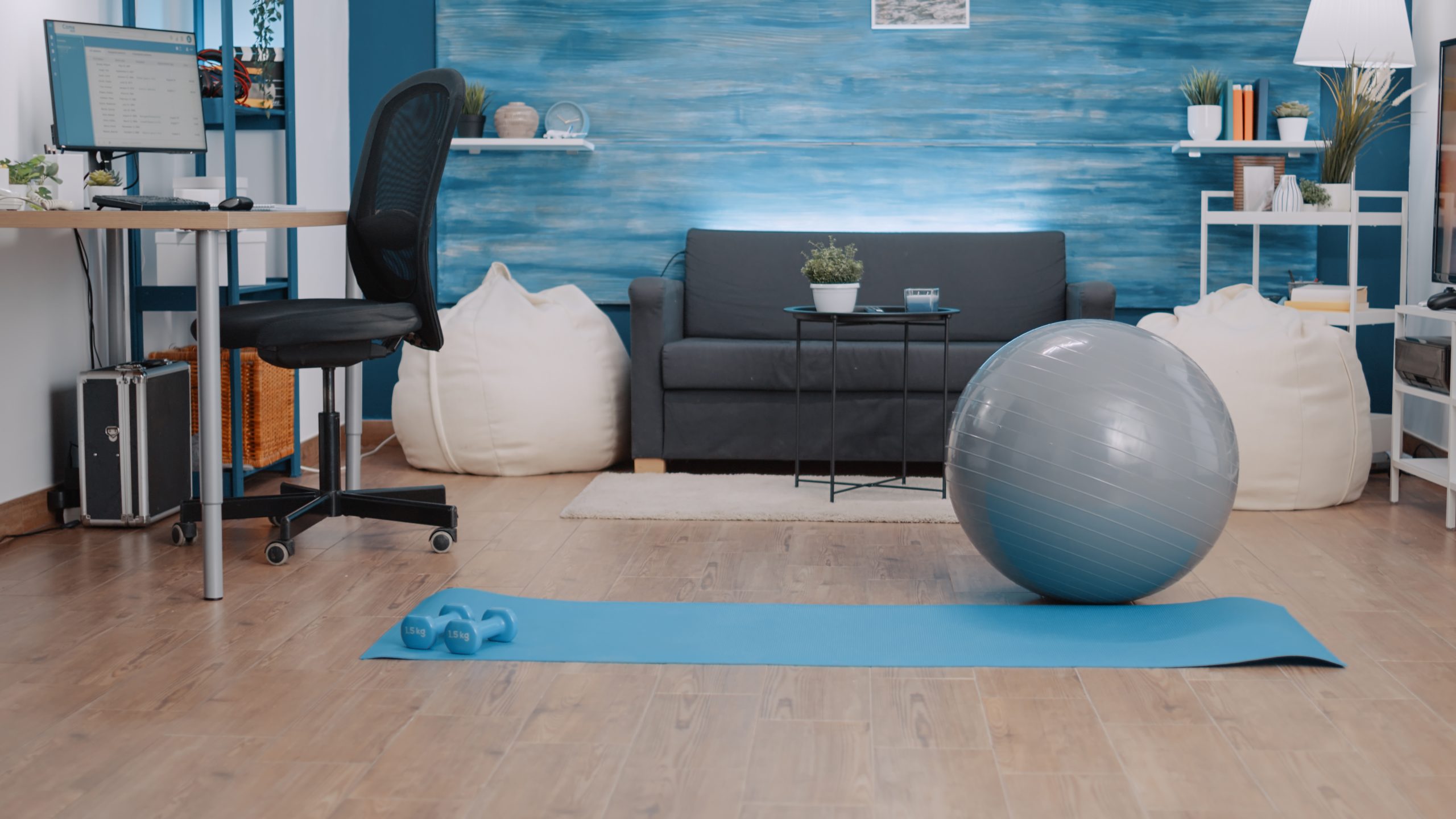
The Application Where Standard Residential Flooring Fails
Home gyms place flooring demands that standard residential flooring wasn’t designed to meet: the concentrated point load of heavy weight equipment (a rack loaded with 300+ pounds of weight plates applies force to a small footprint), the repeated impact of dropped weights or jumping exercises, the lateral stress of movements that generate friction, and the moisture from sweat that residential flooring absorbs poorly.
A residential LVP floor that’s perfect in the living room will dent under heavy equipment, crack under dropped weights, and delaminate under the moisture exposure of intense exercise. Selecting appropriate flooring for a home gym is a different exercise than selecting residential flooring — the performance requirements are different and the materials that meet them are specific.
Rubber Flooring: The Purpose-Built Solution
Rubber flooring — either in tile format (typically 3/4 inch thick, 2×2 foot or 4×4 foot tiles) or in roll format (3–10 foot wide rolls cut to length) — is the industry standard for commercial gym flooring and the most appropriate choice for home gyms with heavy equipment and high-impact use. Recycled rubber (made from recycled tires) is the most common and most affordable variety; virgin rubber is more expensive and produces a cleaner appearance with less rubber odor.
At 3/4 inch thickness, rubber flooring absorbs impact that damages harder materials, protects the subfloor from point loads, provides traction for all exercise types, resists moisture absorption, and requires essentially no maintenance. Its limitations: it has a distinctive rubber odor (particularly when new — this dissipates over weeks), it doesn’t look like residential flooring (it looks like gym flooring), and quality options run $1.50–$4 per square foot, which is comparable to or slightly above standard residential flooring costs.
Foam Tiles: For Low-Impact Spaces
Interlocking EVA foam tiles — the brightly colored puzzle-piece foam tiles familiar from children’s play spaces — are appropriate for yoga studios, stretching areas, pilates spaces, and light aerobic exercise. They provide cushioning and traction for bodyweight exercise and are inexpensive, light, and easy to install or remove.
Foam tiles are not appropriate for any space with heavy equipment: barbells, weight racks, or any equipment that concentrates significant weight on a small contact area will compress and eventually crack EVA foam. They also don’t absorb the impact of dropped weights — a dropped barbell on foam tiles will damage the tiles and potentially the subfloor. For low-impact dedicated cardio or yoga spaces, foam works; for weight training, rubber is required.
Hybrid Approaches: Different Materials for Different Zones
Many home gyms serve multiple functions — a weightlifting area, a cardio zone, and a stretching/yoga area — each with different flooring requirements. The most practical approach is zoning the floor by use type: 3/4-inch rubber in the free weights and rack area, thinner rubber (3/8 inch) or LVP over rubber in the cardio zone, and foam or thin rubber in the stretching area.
This hybrid approach uses the most appropriate material in each zone rather than compromising the entire floor to one specification that’s either over-engineered or under-specified for some uses. The transitions between zones (simply where one material ends and another begins) can be managed with transition strips or can abut cleanly where the two materials are the same thickness.
Subfloor Preparation for Gym Flooring
Gym flooring goes directly on the subfloor or existing concrete — there’s no underlayment for rubber or foam applications because the flooring material itself provides the cushioning and impact absorption. The subfloor must be level and free of debris that would create pressure points under the flooring, but it doesn’t need to meet the flatness tolerances required for hardwood or LVP because the flexible rubber accommodates minor imperfections.
In basement gym applications over concrete, a vapor barrier under the rubber flooring is recommended to manage moisture vapor transmission from the slab. This is particularly important in climates with high humidity or in below-grade spaces that accumulate moisture — trapped moisture between a vapor-impermeable rubber floor and a concrete slab creates mold conditions that are difficult to identify without removing the floor.