A security alarm can help in identifying an intruder in multiple ways. Some responds when a person walks into a room. Others with either ear or vibration detection can hear the noise made when glass is broken.
Learning the differences between these sensors when you go for an alarm system installation in Melbourne, can assist you in shopping for a system made for your house, workplace, or store. And, the best setup may even include more than one form of detection.
How Glass-Break Sensors Work?
Glass-break sensors respond to sounds or sounds patterns that are produced when glass is breaking. They can either listen to sounds in specific frequencies or feel vibrations depending on the technology.
They are beneficial for rooms that have an abundance of windows, glass doors, or shopfronts. If the window is broken before entering your home, then the wireless intruder alarm system will set the alarm off.
However, glass-break sensors have limits. Afraid of loud noises but not all loud noises will initiate them and they have to be placed in the correct spot.
How Motion Sensors Work?
Motion sensors detect movement in a limited area. Most of them use passive infrared technology that senses disturbance in heat due to a moving person.
An open room is to be monitored from which a motion sensor can cover without having to monitor all windows. That makes it helpful for hallways, living rooms, as well as various other interior spaces.
But if an intruder comes in through a window and stays out of the scope of a motion detector, this will not be detected.
Glass Break vs Motion Detection
While both technologies are different in their objectives.
Glass-break detection is targeted on an entry point. Motion detection only is related to movement in a boundary area.
Such a comparison can be done simply as follows:
| Feature | Glass-Break Sensor | Motion Sensor |
|---|---|---|
| Detects broken glass | Yes | No |
| Detects movement | No | Yes |
| Useful near windows | Yes | Sometimes |
| Covers open rooms | Limited | Yes |
| Can work as part of layered security | Yes | Yes |
Employing either may provide wider coverage than just using one detection method alone.
Why Wireless Systems are Beneficial?
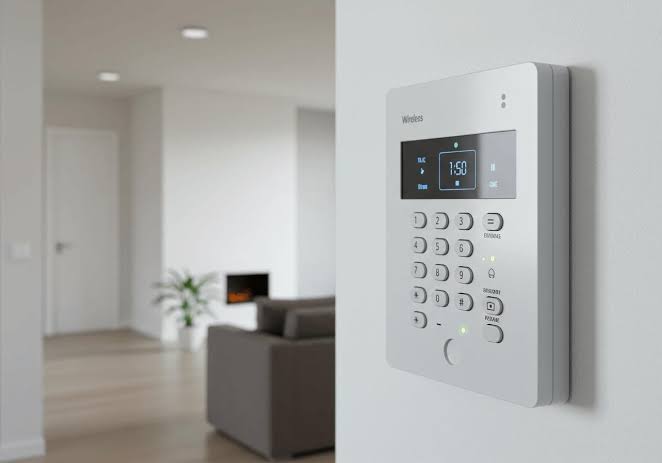
A useful wireless intruder alarm system where it would be impossible to install new cabling. Sensors talk to the central alarm system without needing loads of wiring through walls.
This allows for more flexibility in installation especially within existing homes, rental properties, or buildings where major changes are highly impractical.
Even wireless systems still require proper placement, often constant power and routine maintenance.
Where Should Sensors Be Installed?
The placement of the sensors is equally important as choosing what type of sensor you would want. Different types of protection may be needed for windows, doors, hallways, and rooms with high-value equipment.
Do not install motion sensors in places where heaters, strong sunlight, or other environmental factors could limit response time.
A professional appraisal can also help determine sections that will require overlapping detection for larger properties.
Professional Installation Matters
A correctly installed system will give a better chance for reliable detection. A professional technician can come to your home and analyse the entry points, room layouts, and sensor coverage area before you go for alarm system installation in Melbourne.
Additionally, it may help fine-tune blind spots and ensure alarm, sensors, and control panel functionality through proofreading by professionals.
Which One are You Going with, and/or Both?
No one combination of sensors will be the right fit for every property. A large home, warehouse, or retail premises may have different requirements from a small apartment.
This means that types of detection can be provided by a layered approach. Use glass-break sensors for other vulnerable glass entry points, and motion sensors to watch the interior of the building.
Final Thoughts
These devices pick up on various indications of potential intrusions, such as by using glass-break scanners and motion sensors. For broken glass, you may use a glass-break sensor, and for high foot-traffic movement in an area protected by wall or door sensors, you could install motion sensors.
As such, the use of combined technologies may offer wider coverage for a lot of properties. Regardless of whether you are going for a wireless intruder alarm system, or wired solution − aim to have sensors placed correctly, reliable gear, and professional installation.