
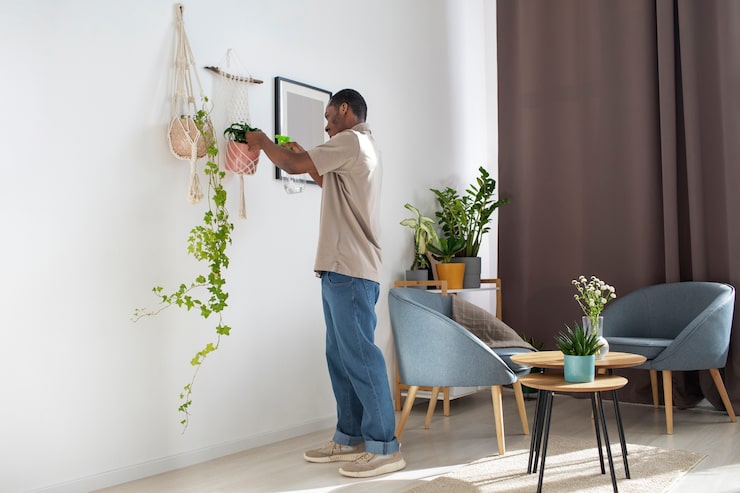
The Refresh That Costs Nothing
The instinct when a room feels stale or unsatisfying is to shop — to find the thing it’s missing and add it. This instinct is usually wrong. Most rooms that feel stale feel that way because of arrangement problems, editing problems, or distribution problems — not because something is absent. The solution is already in the house; it just needs to be deployed differently.
‘Shopping your home’ — moving objects from where they are to where they’d work better, returning items that have migrated out of position, redistributing pieces that are concentrated where they don’t contribute and absent where they would — is the design equivalent of reorganizing a cluttered closet. The contents don’t change; the experience of the space changes completely.
The Cross-Room Object Migration
Objects that have lived in the same room for years become invisible — the brain habituates to their presence and stops registering them. The same object moved to a different room is experienced as new by that room’s occupants, even though no purchase was made. A lamp from the guest bedroom placed in the living room; a ceramic vase from the dining room moved to the study; a stack of books from the home office used on the coffee table — these relocations cost nothing and change the objects’ visual availability.
Walk through every room specifically looking for objects that would work better somewhere else — either because they’re not contributing where they are (visually lost, not complementing their surroundings) or because another room has a gap they would fill. The cross-room migration is the most immediately impactful shop-your-home technique.
Furniture Rearrangement: The Biggest Change Available for Free
Rearranging the furniture in a room creates the most dramatic refresh available without any expenditure. The human brain responds to spatial changes more strongly than to decorative changes — the same furniture in a new arrangement creates a genuinely new experience of the space, not just a modified one.
The most productive rearrangement exercise: pull everything out of the room and place it in the hall (or create a plan on paper first if this isn’t practical), then bring items back in with fresh eyes and arrange from scratch based on the room’s actual geometry and circulation needs rather than on the existing arrangement’s logic. Often the arrangement that results from this process is significantly better than what existed — simply because the previous arrangement was never re-evaluated after the initial move-in placement.
The Textile Swap: Maximum Impact for Minimum Effort
Textiles — throw pillows, blankets, table runners, and small rugs — are the lightest, most interchangeable elements in a home. Most households have more textiles than are deployed at any given time, distributed between rooms and between active use and storage. Gathering every textile from every room and redistributing them based on where they work best (rather than where they started) often reveals combinations that are better than anything currently in place.
Seasonal textile swaps — pulling the summer linens in fall and replacing with heavier, warmer textiles from storage — refresh every room they touch simultaneously and are part of the regular home maintenance rhythm rather than a special project.
The Print and Frame Recycle
Art and photographs hung in the same position for years become part of the wall rather than part of the visual experience. Moving framed pieces between rooms — putting the bedroom photo in the living room, moving the living room print to the office — creates the experience of new art in each location without purchasing anything.
The even more impactful version: reframe pieces that have been in the wrong frame since acquisition. A photograph in a thin black frame that’s been sitting in a closet because it ‘didn’t go’ with a certain room may work beautifully in that same room in a natural wood frame or a brass frame — and frame-only swaps between pieces already in the home cost nothing. Reassessing whether the piece or the frame was the problem resolves many art display decisions that were incorrectly attributed to the piece itself.